



The history of St Cuthbert’s is a cause for genuine pride. Academic achievements and sporting successes in abundance are on record. Our former pupils grace all the professions and make a very valuable contribution to the life of the Church in many parts of the world. However, what is even more important is the number of our Old Boys who have become priests.
Tribute must be paid to the many priests, some long dead, for the sacrifice and devotion they showed in their teaching careers at St Cuthbert’s. Nor can we fail to admire the foresight and determination of Bishop Chadwick and the pioneer priests who embarked on the daunting task of providing the best in Catholic education for our young men.
The school’s motto ‘Quies In Caelo’ encourages all members of the school community to work for the greater glory of God and the common good. After all, you can ‘rest in heaven’ but for now, there is plenty of work to do.

Through The Years
Coat of Arms
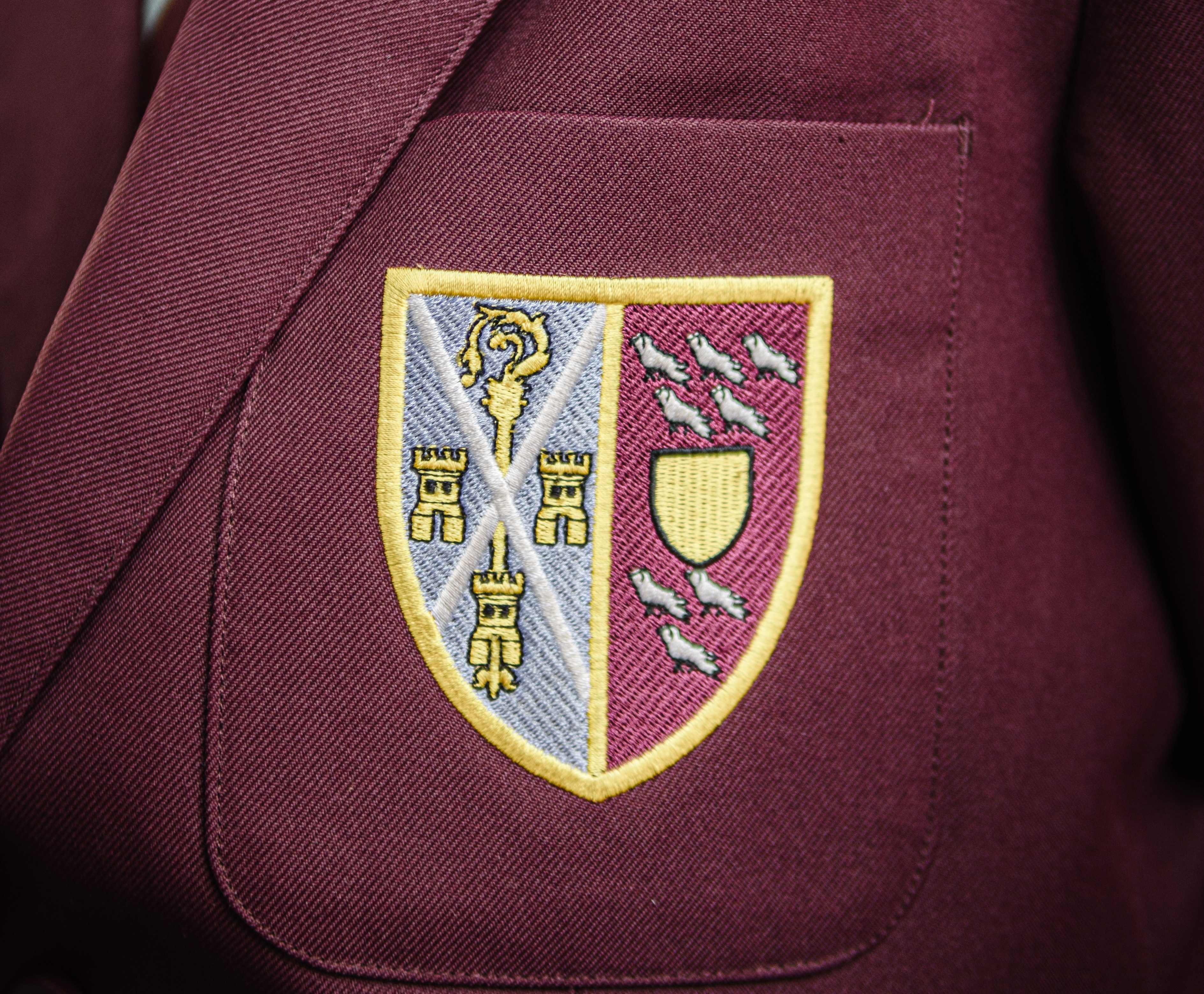
The school’s coat of arms is impaled, placing two shields side by side: the arms of the Diocese of Hexham and Newcastle on the dexter side (bearer’s right, viewer’s left) and those of Bishop James Chadwick, the School’s Founder, on the sinister side. In heraldry, a blazon is the precise written description that defines the colours, symbols, and arrangement of a coat of arms. The diocesan arms consist of a sky‑blue field bearing a gold bishop’s crosier, three gold castles representing Newcastle, and a white saltire that unifies the design. Bishop Chadwick’s arms form the other half of the shield, showing a red field with a gold inescutcheon, surrounded by eight martlets—stylised, footless birds traditionally used in heraldry. Over time, many have come to interpret these martlets as eider, or “Cuddy,” ducks associated with St Cuthbert, though this was unlikely to have been their original purpose. Colours in heraldry, particularly in ecclesiastical settings, carry symbolic meaning, representing virtues such as purity, hope, sacrifice, and heavenly life, and help express the character and identity of the institution.
Mascot
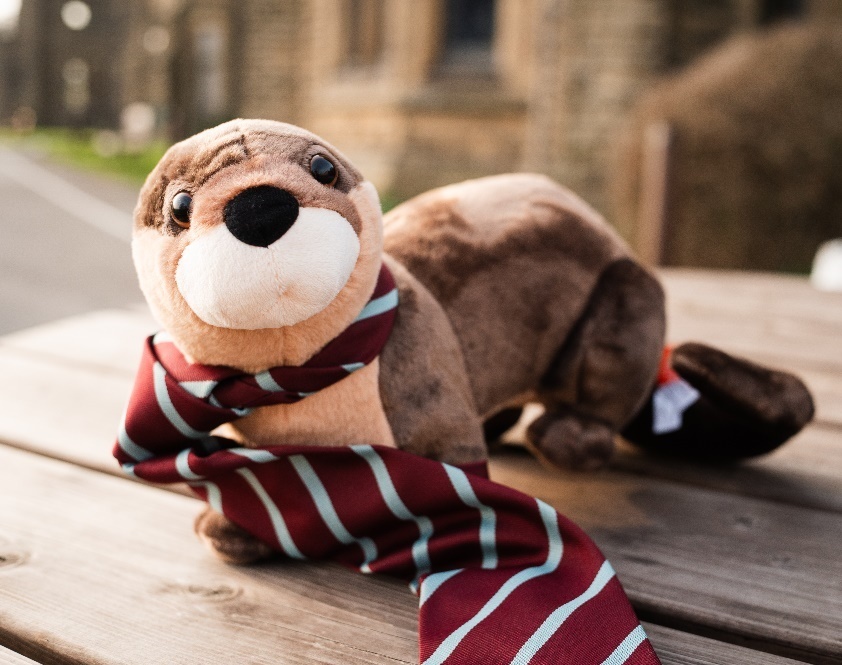
At St Cuthbert’s Catholic Boys’ School, our mascot Cuddy the Otter reflects the heart of our mission to form great men who live out the values of competence, conscience, compassion, and commitment. Cuddy is inspired by one of the most cherished stories about St Cuthbert, our patron. During his time on Lindisfarne, St Cuthbert was known for his deep holiness and his gentle bond with the natural world. Tradition tells that as he prayed in the cold North Sea, otters emerged from the water to warm and dry his feet. These creatures came to symbolise not only St Cuthbert’s kindness and humility, but also his harmony with creation.
The name Cuddy comes from the affectionate North‑East nickname for St Cuthbert himself, connecting our school to our local heritage as well as our Catholic identity within the Diocese of Hexham and Newcastle. Cuddy reminds our boys of the qualities St Cuthbert embodied: the competence that comes from dedication; the conscience that guides wise moral choices; the compassion shown in his care for others; and the commitment with which he lived out his faith.
Cuddy also stands as a sign of our responsibility to care for God’s creation. St Cuthbert is often regarded as an early protector of the natural world, and we continue that legacy by encouraging our pupils to be good stewards of the environment. As Pope Francis writes in Laudato Si’, “The entire material universe speaks of God’s love.” Cuddy helps us remember this call: to recognise creation as a gift, to treat it with respect, and to act with responsibility for future generations.
Friendly, familiar, and rooted in our story, Cuddy the Otter is more than a mascot—he is a daily reminder of who we are and the great men our boys are becoming.